Psychotherapy vs Therapy: Is There Really a Difference?
Is there actually a difference between psychotherapy and therapy? Yes, there is a difference, even though the terms are frequently used interchangeably in everyday conversation. All psychotherapy is therapy, but not all therapy is psychotherapy.
Therapy is the broader term for support that improves emotional, mental, or physical well-being. Psychotherapy is a more specific type of talk-based mental health support focused on emotions, relationships, thoughts, and deeper emotional struggles.
Here is how psychotherapy and therapy are commonly understood differently.
The real difference between psychotherapy and therapy
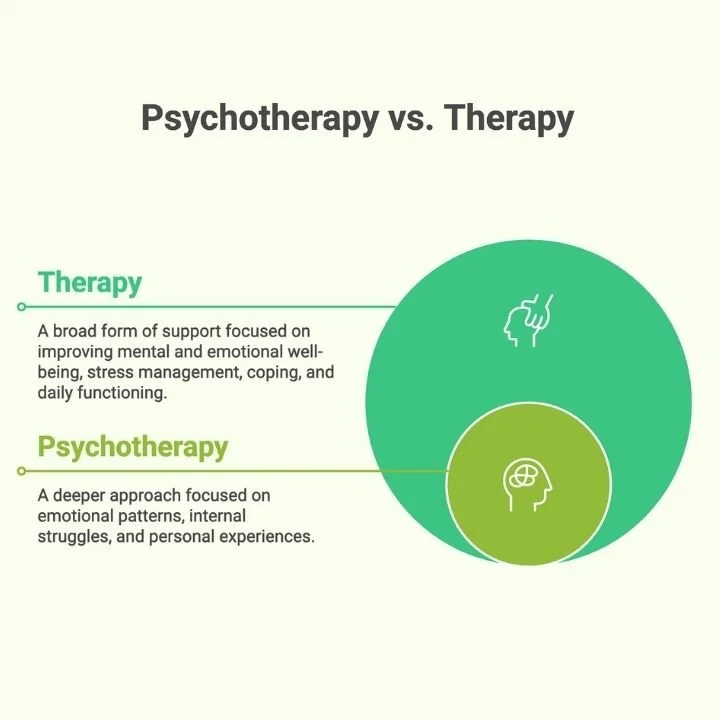
The difference between psychotherapy and therapy usually comes down to depth and focus.
Therapy is a broader term used for support that helps improve emotional, mental, or physical well-being. Psychotherapy is a more specific type of therapy focused on the emotional experiences, relationship patterns, thoughts, and internal struggles that may be affecting how you move through daily life.
The process may also feel different depending on the type of support you are looking for. Some people benefit more from therapy focused on current stress, coping, or life changes. Others may look for psychotherapy to better understand deeper emotional patterns, relationships, and experiences.
Why people use psychotherapy and therapy interchangeably

People often use psychotherapy and therapy interchangeably because both usually involve talking with a therapist or mental health professional about emotional struggles, stress, relationships, or personal challenges. In everyday life, the word therapy tends to feel more familiar, approachable, and easier to say.
When someone says they are “going to therapy,” they are often referring to psychotherapy without thinking much about the technical difference between the terms. The distinction usually matters more in clinical settings than it does in normal conversation.
When the difference matters for choosing support

The difference usually matters most when you are trying to understand what kind of support feels most aligned with what you have been carrying emotionally and mentally.
You want help with current stress or coping
Short-term therapy may feel more helpful when you are dealing with something happening in the present, such as stress, burnout, grief, relationship conflict, or a major life change.
The conversations often focus more on emotional support, coping strategies, and helping daily life feel more manageable again.
You want to understand deeper patterns
Psychotherapy may feel more helpful when certain emotions, reactions, or relationship struggles keep repeating in ways that feel difficult to fully understand.
The process often focuses more deeply on emotional patterns, unresolved emotions, and the ways those may still be affecting how you think, feel, or respond emotionally.
You want support for relationships or identity
Therapy may feel helpful when relationship stress, communication problems, or emotional disconnection have started affecting daily life.
Psychotherapy may feel more helpful when questions around identity, self-worth, boundaries, or recurring relationship patterns feel deeper, emotionally heavy, or difficult to make sense of internally.
What matters more than the label

Sometimes the most important part is not the label itself, but finding support that feels emotionally safe, supportive, and helpful for what you are going through.
Research has consistently shown that feeling emotionally safe, understood, and connected during therapy can strongly affect how helpful the process feels.
When conversations feel supportive and emotionally grounding, it can become easier to recognize patterns, process emotions, and feel more connected to yourself and the people around you.
Find therapy near you in Rochester Hills
The difference between psychotherapy and therapy can sometimes feel confusing, especially when both terms are often used in similar ways.
Some people are looking for support with present stress or life changes, while others want deeper conversations around relationships, self-worth, emotions, or unresolved experiences.
Having the right support can help difficult emotions feel less overwhelming and easier to work through in a way that feels more grounded and manageable. Get a Free 30-Minute Consultation.
Frequently asked questions
What is the difference between a therapist and a psychotherapist?
A therapist is a broad term for professionals who provide emotional, mental, or physical support. A psychotherapist specifically focuses on emotional struggles, relationship difficulties, thoughts, and behaviors through deeper talk-based mental health support.
Do I need counselling or psychotherapy?
Counselling may feel more helpful when you are moving through a current stressor, grief experience, or major life change. Psychotherapy may feel more helpful when certain emotions, relationship struggles, or unresolved experiences keep feeling emotionally heavy or difficult to move through.
How do you know if you need psychotherapy?
Psychotherapy may help when emotions, stress, relationship struggles, or emotional overwhelm start affecting daily life consistently. Many people seek psychotherapy when certain emotional difficulties keep returning or feel emotionally heavy.
What conditions are treated with psychotherapy?
Psychotherapy commonly supports anxiety, depression, trauma, PTSD, grief, burnout, relationship difficulties, emotional regulation struggles, and self-worth concerns. It may also help people processing emotionally overwhelming or unresolved experiences.
How long does psychotherapy last?
The length of psychotherapy depends on what you are working through emotionally and what kind of support feels most helpful. Some people attend for several months, while others continue longer for deeper emotional or relationship support.