What Questions Does a Therapist Ask in the First Session
What questions does a therapist ask in the first session? Therapists often ask about what has been feeling difficult recently, what emotional or relationship patterns keep repeating, and what support may feel helpful for you right now.
The first session is usually less about having the right answers and more about creating a clearer understanding of what your experiences have been like lately.
Below are some of the questions therapists commonly ask during that first conversation.
25 common questions therapists often ask in the first session
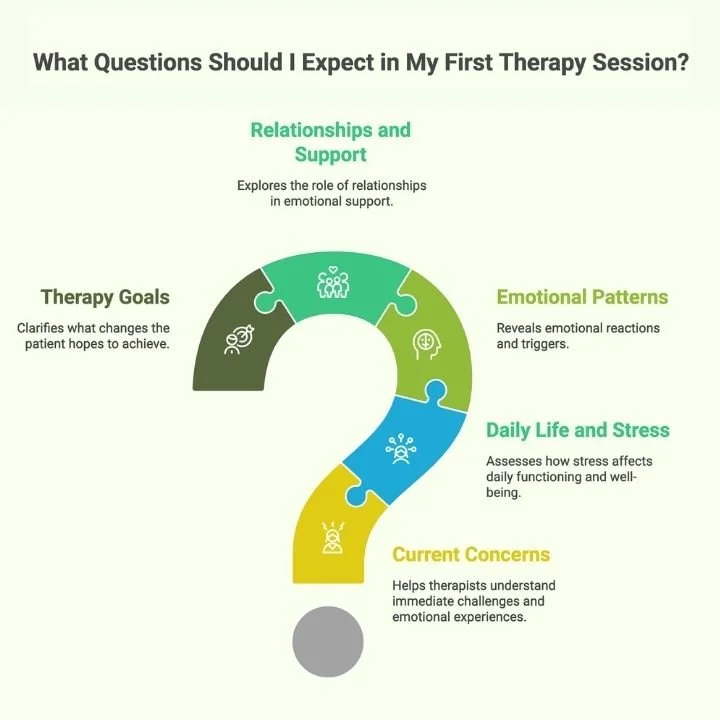
The first session usually includes questions that help therapists understand your current concerns, emotional experiences, support system, and goals for therapy.
Current concerns
Therapists often begin with questions about what feels most difficult right now.
Common questions may include:
What brought you to therapy at this time?
What has been feeling hardest recently?
How long have these feelings been affecting you?
What feels different compared to a few months ago?
What kind of support are you hoping for?
These questions help therapists understand what feels most emotionally present for you right now.
Daily life and stress
Questions about routines, sleep, and stress help therapists understand how emotional strain may be affecting daily functioning. Common questions may include:
How has stress been affecting your daily life?
Have you noticed changes in sleep or energy?
What parts of the day feel most overwhelming?
Has it been harder to focus recently?
What helps you feel more grounded during stress?
Emotional patterns
Emotional reactions can reveal how people respond to conflict, uncertainty, or pressure. Therapists may ask:
What emotions have been coming up most often?
Are there situations that trigger strong reactions?
Do certain conflicts keep repeating?
What thoughts stay on your mind most frequently?
How do you usually respond when overwhelmed?
These conversations often help people begin noticing connections between emotional reactions, stress, and past experiences.
Relationships and support
Relationships can strongly affect emotional well-being, especially during periods when you feel emotionally overwhelmed or need support from the people around you.
Questions may include:
Who do you feel closest to?
How would you describe your relationships?
Do you feel emotionally supported?
Are there conflicts that feel unresolved?
Who do you usually turn to during difficult moments?
Therapy goals
Therapists also ask questions that help clarify what you hope may change through therapy. Questions may include:
What would progress look like for you?
What changes would feel meaningful to you?
Have you worked with a therapist before?
What helped or did not help previously?
What would help you feel comfortable during sessions?
Early conversations help build trust and emotional safety, which research has linked to stronger and more stable therapeutic relationships.
Why therapists ask about your past, relationships, and identity

Therapists ask about personal history because emotional reactions often connect to earlier experiences, environments, and learned coping patterns. This helps therapists better understand the context surrounding what you may be experiencing right now.
A study also found that open and reflective conversations can help people explore emotions and experiences more openly.
These conversations are not about placing blame on your family, childhood, or previous relationships.
They are meant to help you notice patterns that may have developed quietly, especially in moments when emotions begin to feel harder to manage or fully understand.
What if you do not know how to answer?

It is completely normal not to know how to answer every question during the first session. Many people enter therapy carrying emotions or experiences that feel difficult to explain clearly at first.
Therapists are generally less focused on perfect answers and more focused on understanding your experiences gradually. Saying “I do not know,” “I have never thought about that before,” or “I am not ready to talk about that yet” is completely acceptable.
Sometimes you may only recognize that something feels emotionally heavy or harder to manage recently. Therapy creates space for those patterns and emotions to become clearer.
Questions to ask a therapist near you

The first session is also a chance for you to understand how a therapist approaches therapy and whether the connection feels comfortable for you.
Approach and fit
Questions about approach and communication can help you understand what sessions may feel like.
You may want to ask:
How do you usually approach therapy?
What types of concerns do you commonly work with?
How do sessions typically flow?
How do you help people manage stress or relationship concerns?
What does progress often look like?
Feeling emotionally safe and understood can make it easier to stay engaged in therapy consistently.
What happens next
Practical questions can also help reduce uncertainty around the process.
You may want to ask:
How long are sessions?
How often do clients usually attend therapy?
What happens after the first appointment?
How does confidentiality work?
What should I expect moving forward?
Talk with a therapist near you in Rochester Hills
Starting therapy can feel unfamiliar, especially if you are unsure what questions does a therapist ask during the first session. The first conversation often creates space for you to better understand what has been weighing on you emotionally, mentally, or relationally.
As you begin recognizing patterns, reactions, and stressors more clearly, situations that once felt difficult to process can start making more sense.
Get a Free 30-Minute Consultation to begin the conversation.
Frequently Asked Questions
How do I prepare for a therapy session?
You do not need to prepare perfectly before a therapy session. It can help to think about what has been feeling emotionally heavy, stressful, or harder to manage recently so you have a starting point for the conversation.
What do I tell my therapist in the first session?
The first session usually begins with what has been feeling most difficult lately. You do not need to explain your entire life story immediately for therapy to feel helpful or meaningful.
How do I not feel awkward in therapy?
Feeling awkward during therapy is very common, especially during the first appointment. Talking openly about emotions, stress, or relationships can take time, which is why therapists often focus on creating a calm and supportive conversation first.
What should I avoid telling my therapist?
Therapy is meant to be a space where you can speak honestly without feeling judged. If something feels difficult to talk about immediately, it is completely okay to move at a pace that feels more comfortable for you.
What are signs of a good counselor?
A good counselor often helps you feel emotionally safe, understood, and comfortable enough to speak openly. You may also notice that conversations leave you with a clearer understanding of your emotions, reactions, or relationship patterns.